
Class 6 – Social Science Economics Practice Worksheet Chapter 13: The Value of Work Practice Worksheet
Class 6 – Social Science Economics Chapter 13: The Value of Work Practice Worksheet. (CBSE Class 6 Social Science – ‘Exploring Society: India and Beyond‘ Book)
Class 6 Social Science – Chapter 13 The Value of Work – Practice Worksheet
Class 6 Social Science – Exploring Society: India and Beyond
Theme D – Economic Life Around Us
SST Chapter 13: The Value of Work
Class 6 – Social Science Economics Chapter 13: The Value of Work Practice Worksheet. Complete Worksheet for Class 6 Social Science – Chapter 13 : The Value of Work (Exploring Society: India and Beyond Textbook).
Class 6 – Social Science Economics Chapter 13: The Value of Work Practice Worksheet
Class 6 Social Science Worksheet
Chapter 13 – The Value of Work
Book: Exploring Society: India and Beyond
Theme: Economic Life Around Us
Name: ____________________
Class: ____________________
Date: ____________________
Section A: Very Short Answer Questions (1 Mark)
- What are economic activities?
- What are non-economic activities?
- What is meant by salary?
- What is a wage?
- What is payment in kind?
- What is value addition?
- What is a market?
- What is meant by fee?
- What does sevā mean?
- What is community participation?
Related Practice Questions:
- Class 6 Social Science Economics Chapter 13 The Value of Work MCQs
- Class 6 Economics Chapter 13 The Value of Work – NCERT Question Answers
- Class 6 Economics Chapter 13 The Value of Work – Extra Important Questions
- Class 6 Economics Chapter 13 The Value of Work – Practice Worksheet
- Class 6 Social Science Economics Chapter 13 The Value of Work – True False Questions
- Class 6 Social Science Economics Chapter 13 The Value of Work – Fill in the Blanks
- Class 6 Social Science Economics Chapter 13 The Value of Work – Match the Following
- Class 6 Social Science Economics Chapter 13 The Value of Work – Summary Notes
Section B: Short Answer Questions (2 Marks)
- Give two examples of economic activities.
- Give two examples of non-economic activities.
- Why is Geeta Aunty’s job considered an economic activity?
- What voluntary work does Rohan do on weekends?
- What activities does Kabir’s grandfather do after retirement?
- Why are non-economic activities important for society?
- What work does Kavya’s uncle do?
- What job does Kavya’s aunt perform?
- What type of payment does Sahil receive for his work?
- What example of economic activity is shown in the mango orchard?
Section C: Fill in the Blanks
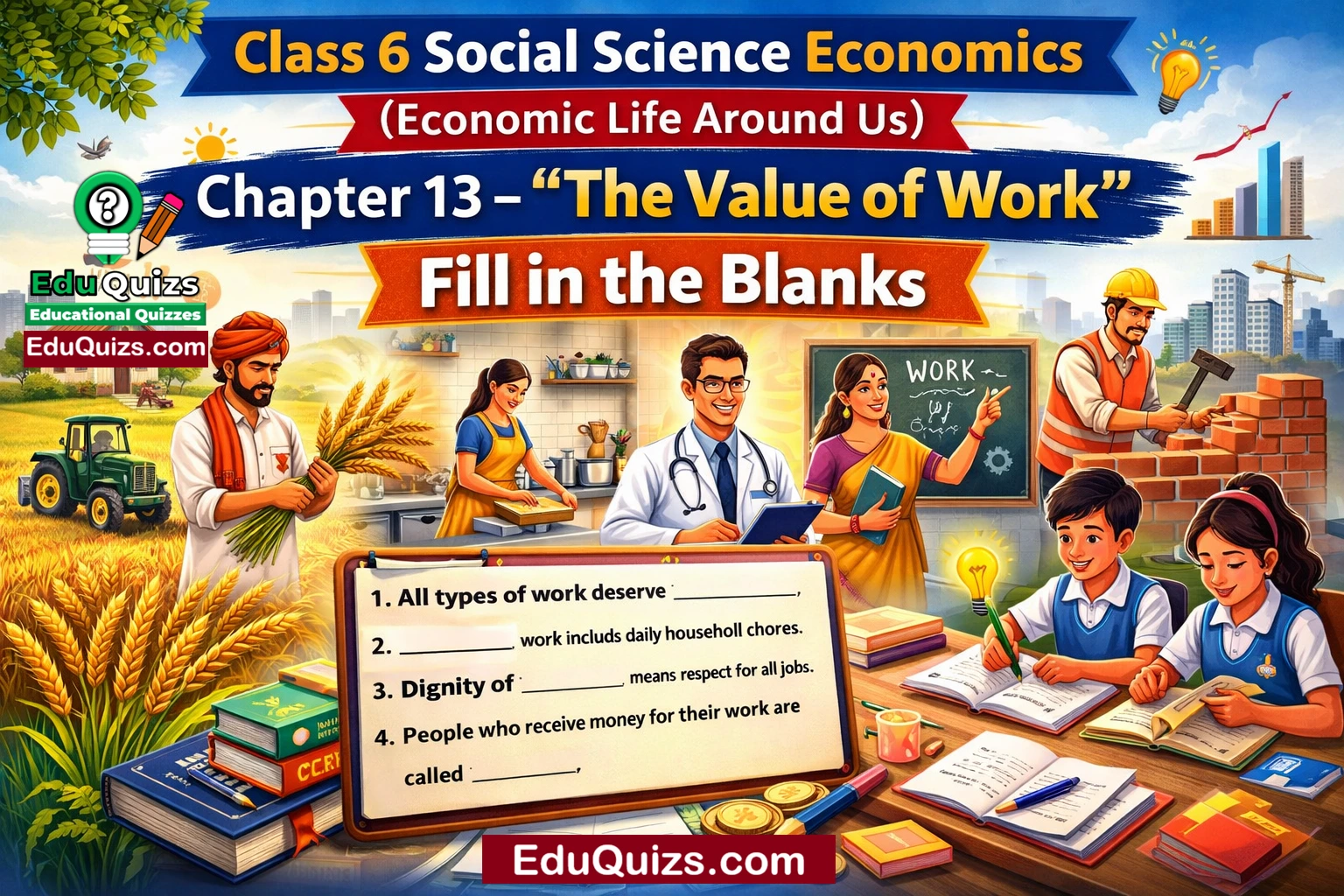
- Activities that involve money or payment are called __________ activities.
- Activities done out of love, care, and respect are called __________ activities.
- Geeta Aunty works as a pilot in the __________.
- Rohan works as a __________ engineer.
- Kavya’s uncle operates a __________ at the construction site.
- A payment made for professional services is called a __________.
- A fixed monthly payment to an employee is called __________.
- Sahil receives some of his payment in the form of __________.
- Turning wood into furniture is an example of __________ addition.
- Langar at a gurudwara is an example of __________ service.
Section D: True or False
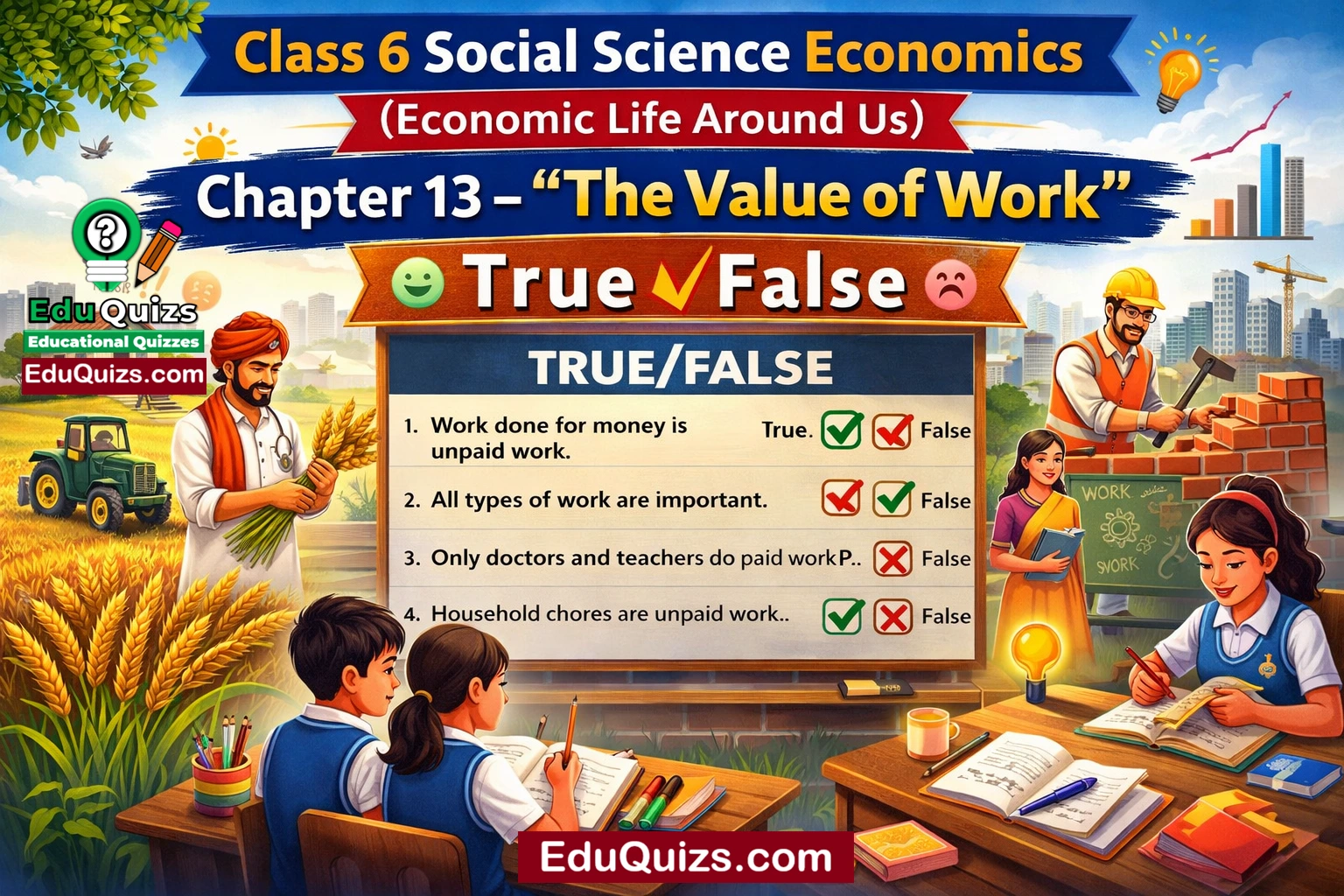
- Economic activities involve the exchange of goods or services for money.
- Parents cooking food for the family is an economic activity.
- Geeta Aunty is a pilot in the Indian Air Force.
- Rohan works as a doctor in a hospital.
- Payment in kind means payment given in goods instead of money.
- A carpenter adds value to wood by making furniture.
- Non-economic activities have no importance in society.
- Sahil works as a farm labourer.
- Langars in gurudwaras serve free food to visitors.
- Community participation helps improve society.
Section E: Match the Following
| Column A | Column B |
|---|---|
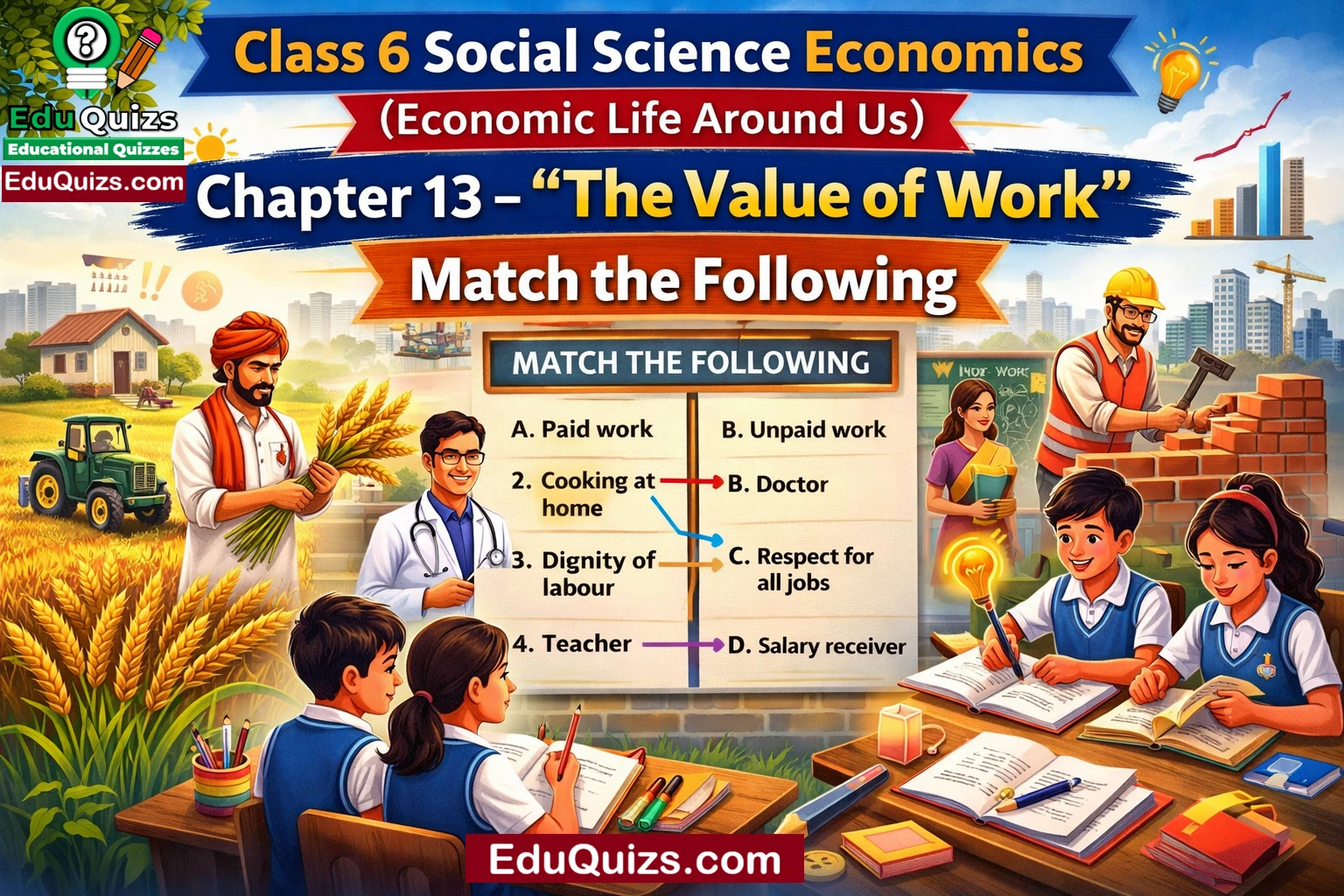
| Salary | Fixed monthly payment |
| Wage | Payment for work done for a specific period |
| Fee | Payment for professional services |
| Payment in kind | Payment in goods instead of money |
| Sevā | Selfless service |
Section F: Think and Answer
- Why do people engage in different types of work?
- Why are non-economic activities valuable even though they do not earn money?
- How does a carpenter add value to wood?
- Why is cooperation in the community important?
- How do economic activities help society develop?
Section G: Case Study Questions
Read the passage and answer the questions.
Rajesh is a carpenter who buys wood from the market for ₹600 and makes a chair from it. He sells the chair in the market for ₹1000.
- What is Rajesh’s profession?
- How much does the wood cost?
- What is the selling price of the chair?
- What is the value added by Rajesh?
- Why is this an economic activity?
Section H: Long Answer Questions (4–5 Marks)
- Explain the difference between economic and non-economic activities with examples.
- Describe the different ways people receive payment for their work.
- Explain the concept of value addition with the example of Rajesh the carpenter.
- Discuss the importance of community participation in society.
- Explain how economic activities contribute to development.
- Why should all types of work be respected in society?
- Describe the various activities performed by people in Anu and Kabir’s story.
- Explain the importance of sevā (selfless service) in society.
Section I: Activity-Based Questions
- List five economic activities you observe around your home or school.
- Write three non-economic activities that you and your family do every day.
- Identify two professions that add value to products. Explain how.
- Write about a community service activity in your area.
Section J: The Big Questions
- What are the different types of activities that people engage in?
- What is their contribution to our everyday lives?
Class 6 Social Science Worksheet – 1 (with Answers)
Chapter 13 – The Value of Work
Book: Exploring Society: India and Beyond
Theme: Economic Life Around Us
Name: ____________________
Class: ____________________
Date: ____________________
Section A: Very Short Answer Questions (1 Mark)
1. What are economic activities?
Answer: Economic activities are activities through which people earn money or receive payment for producing goods or providing services.
2. What are non-economic activities?
Answer: Non-economic activities are activities done out of love, care, or social responsibility without expecting payment.
3. What is meant by salary?
Answer: Salary is a fixed regular payment made by an employer to an employee, usually on a monthly basis.
4. What is a wage?
Answer: A wage is payment given to workers for work done for a short period such as daily or weekly.
5. What is payment in kind?
Answer: Payment in kind means receiving goods or services instead of money as payment.
6. What is value addition?
Answer: Value addition is the process of increasing the value of a product by transforming it into a more useful or attractive form.
7. What is a market?
Answer: A market is a place where goods and services are bought and sold.
8. What is meant by fee?
Answer: A fee is payment given to professionals such as doctors, lawyers, or teachers for their services.
9. What does sevā mean?
Answer: Sevā means selfless service done for the benefit of others without expecting any reward.
10. What is community participation?
Answer: Community participation means people working together to improve their community or society.
Section B: Short Answer Questions (2 Marks)
1. Give two examples of economic activities.
Answer:
- A farmer selling crops in the market.
- A teacher teaching students in a school for salary.
2. Give two examples of non-economic activities.
Answer:
- Parents cooking food for their family.
- Helping neighbours during difficult times.
3. Why is Geeta Aunty’s job considered an economic activity?
Answer: Geeta Aunty works as a pilot and receives a salary for her work. Since she earns money for providing a service, it is an economic activity.
4. What voluntary work does Rohan do on weekends?
Answer: Rohan teaches children in his neighbourhood on weekends without charging money.
5. What activities does Kabir’s grandfather do after retirement?
Answer: Kabir’s grandfather spends time gardening, reading books, and helping children with their studies.
6. Why are non-economic activities important for society?
Answer: Non-economic activities promote love, care, cooperation, and social harmony in society.
7. What work does Kavya’s uncle do?
Answer: Kavya’s uncle works as a technician and operates a bulldozer at a construction site.
8. What job does Kavya’s aunt perform?
Answer: Kavya’s aunt works at the village post office and also conducts online classes for students.
9. What type of payment does Sahil receive for his work?
Answer: Sahil receives daily wages and sometimes payment in kind such as mangoes.
10. What example of economic activity is shown in the mango orchard?
Answer: Sahil working as a farm labourer in the mango orchard and receiving payment for his work is an economic activity.
Section C: Fill in the Blanks
- Activities that involve money or payment are called economic activities.
- Activities done out of love, care, and respect are called non-economic activities.
- Geeta Aunty works as a pilot in the Indian Air Force.
- Rohan works as a software engineer.
- Kavya’s uncle operates a bulldozer at the construction site.
- A payment made for professional services is called a fee.
- A fixed monthly payment to an employee is called salary.
- Sahil receives some of his payment in the form of mangoes.
- Turning wood into furniture is an example of value addition.
- Langar at a gurudwara is an example of community service.
Section D: True or False
- Economic activities involve the exchange of goods or services for money.
Answer: True - Parents cooking food for the family is an economic activity.
Answer: False - Geeta Aunty is a pilot in the Indian Air Force.
Answer: True - Rohan works as a doctor in a hospital.
Answer: False - Payment in kind means payment given in goods instead of money.
Answer: True - A carpenter adds value to wood by making furniture.
Answer: True - Non-economic activities have no importance in society.
Answer: False - Sahil works as a farm labourer.
Answer: True - Langars in gurudwaras serve free food to visitors.
Answer: True - Community participation helps improve society.
Answer: True
Section E: Match the Following
| Column A | Column B |
|---|---|
| Salary | Fixed monthly payment |
| Wage | Payment for work done for a specific period |
| Fee | Payment for professional services |
| Payment in kind | Payment in goods instead of money |
| Sevā | Selfless service |
Section F: Think and Answer
1. Why do people engage in different types of work?
Answer: People engage in different types of work to earn a living, support their families, and provide goods and services needed by society.
2. Why are non-economic activities valuable even though they do not earn money?
Answer: They promote care, cooperation, kindness, and help build strong relationships in society.
3. How does a carpenter add value to wood?
Answer: A carpenter converts raw wood into useful furniture such as chairs, tables, and cupboards, which increases its value.
4. Why is cooperation in the community important?
Answer: Cooperation helps people work together to solve problems, improve living conditions, and support each other.
5. How do economic activities help society develop?
Answer: Economic activities produce goods and services, create employment, generate income, and improve the standard of living.
Section G: Case Study Questions
Rajesh is a carpenter who buys wood from the market for ₹600 and makes a chair from it. He sells the chair in the market for ₹1000.
1. What is Rajesh’s profession?
Answer: Rajesh is a carpenter.
2. How much does the wood cost?
Answer: The wood costs ₹600.
3. What is the selling price of the chair?
Answer: The selling price of the chair is ₹1000.
4. What is the value added by Rajesh?
Answer: The value added is ₹400 (₹1000 – ₹600).
5. Why is this an economic activity?
Answer: It is an economic activity because Rajesh earns money by making and selling furniture.
Section H: Long Answer Questions (4–5 Marks)
1. Explain the difference between economic and non-economic activities with examples.
Answer: Economic activities are activities done to earn money or receive payment for producing goods or services. For example, a farmer selling crops or a teacher teaching in a school. Non-economic activities are done out of love, care, or social responsibility without expecting payment. Examples include parents caring for children or helping neighbours.
2. Describe the different ways people receive payment for their work.
Answer: People receive payment in different ways such as salary, wages, fees, and payment in kind. Salary is a fixed monthly payment to employees. Wages are paid daily or weekly to workers. Fees are payments made to professionals like doctors or lawyers. Payment in kind means receiving goods instead of money.
3. Explain the concept of value addition with the example of Rajesh the carpenter.
Answer: Value addition means increasing the value of a product by transforming it into a more useful form. Rajesh buys wood for ₹600 and makes a chair which he sells for ₹1000. By converting wood into furniture, he adds value to the raw material.
4. Discuss the importance of community participation in society.
Answer: Community participation involves people working together to improve society. It helps in solving social problems, improving cleanliness, helping the needy, and promoting unity among people.
5. Explain how economic activities contribute to development.
Answer: Economic activities produce goods and services, create jobs, generate income, and improve the quality of life. They help in the growth and development of a country.
6. Why should all types of work be respected in society?
Answer: All types of work contribute to society in different ways. Every worker plays an important role in making society function smoothly, so all work deserves equal respect.
7. Describe the various activities performed by people in Anu and Kabir’s story.
Answer: In the story, people perform different economic and non-economic activities such as working in offices, farming, teaching, and helping family members. These activities show how different types of work support society.
8. Explain the importance of sevā (selfless service) in society.
Answer: Sevā promotes kindness, compassion, and social responsibility. It helps people support each other and builds a strong and caring community.
Section I: Activity-Based Questions
1. List five economic activities you observe around your home or school.
Answer: Shopkeeping, teaching in school, driving buses, selling vegetables, repairing vehicles.
2. Write three non-economic activities that you and your family do every day.
Answer: Cooking food, helping with homework, cleaning the house.
3. Identify two professions that add value to products. Explain how.
Answer:
Carpenter – converts wood into furniture.
Tailor – converts cloth into clothes.
4. Write about a community service activity in your area.
Answer: In my area, people participate in cleanliness drives and help distribute food to the poor during festivals.
Section J: The Big Questions
1. What are the different types of activities that people engage in?
Answer: People engage in economic activities such as farming, teaching, and business, and non-economic activities such as caring for family, volunteering, and helping others.
2. What is their contribution to our everyday lives?
Answer: These activities provide goods, services, care, and support, making our daily lives comfortable and well organized.
Class 6 Social Science Worksheet 2
Chapter 13 – The Value of Work
Book: Exploring Society: India and Beyond
Theme: Economic Life Around Us
Name: _______________________
Class: _______________________
Date: _______________________
Section A: Objective Questions (1 Mark Each)
Choose the Correct Answer
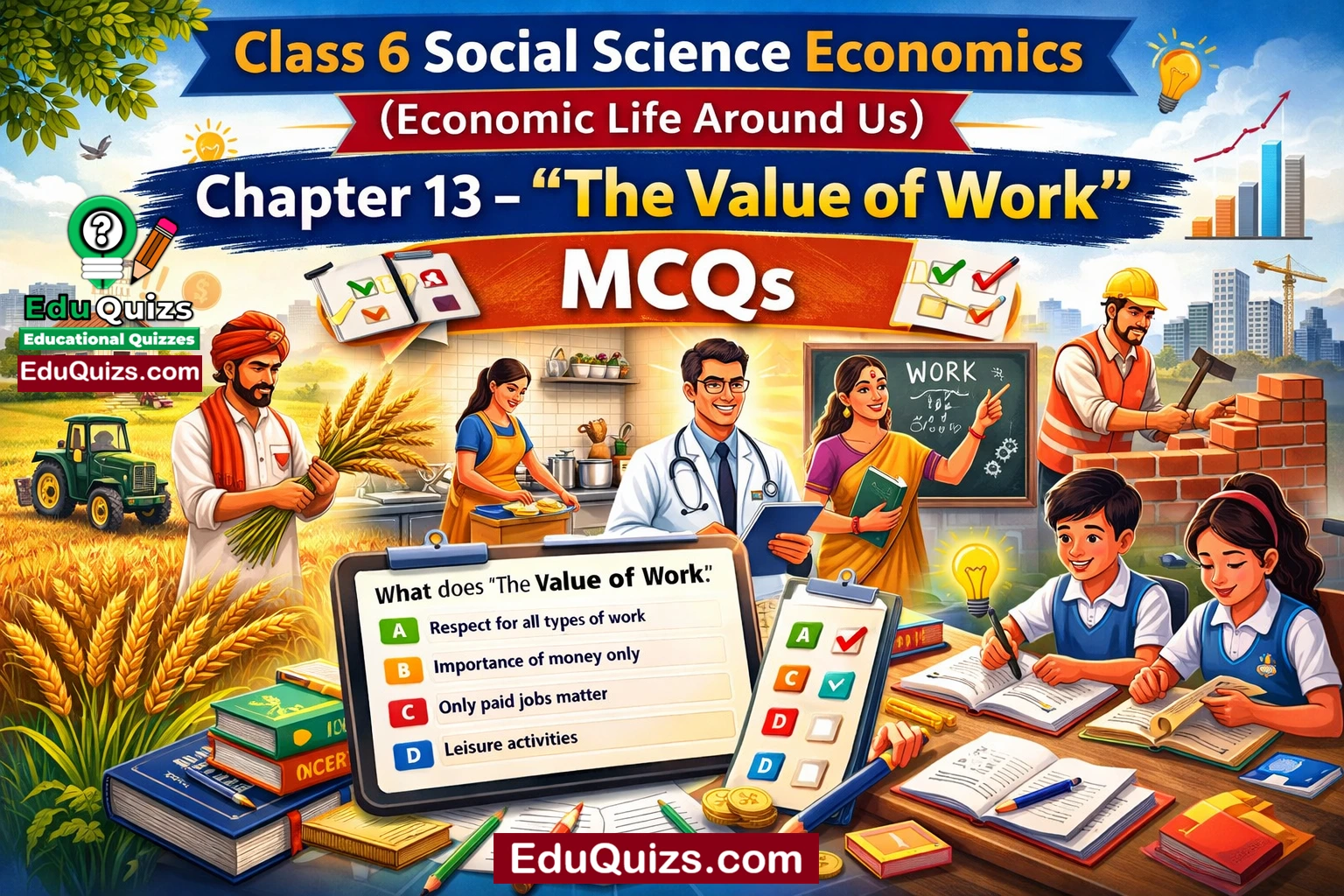
- Activities that involve payment in money or money’s worth are called
a) social activities
b) economic activities
c) cultural activities
d) natural activities - Which of the following is a non-economic activity?
a) A farmer selling crops in the market
b) A doctor treating patients for a fee
c) Parents cooking food for their family
d) A shopkeeper selling clothes - A fixed regular payment made by an employer to an employee is called
a) wage
b) salary
c) fee
d) reward - Payment received in the form of goods instead of money is called
a) value addition
b) payment in kind
c) bonus
d) profit - The work done by Rajesh the carpenter is an example of
a) value addition
b) non-economic activity
c) social activity
d) voluntary service - Sahil works as a
a) carpenter
b) farm labourer
c) doctor
d) shopkeeper - A payment made to a professional such as a lawyer or doctor is called
a) salary
b) wage
c) fee
d) gift - Community kitchens in gurudwaras that provide free food are called
a) bhog
b) langar
c) prasad
d) seva - Cleaning public spaces under Swachh Bharat Abhiyan is an example of
a) economic activity
b) non-economic activity
c) industrial activity
d) private work - The process of increasing the value of a product by transforming it is called
a) production
b) value addition
c) consumption
d) distribution
Section B: Assertion and Reason Questions
Choose the correct option.
A. Both A and R are true and R is the correct explanation of A
B. Both A and R are true but R is not the correct explanation
C. A is true but R is false
D. A is false but R is true
Assertion: Rajesh selling chairs in the market is an economic activity.
Reason: Economic activities involve earning money.
Assertion: Parents helping children with homework is a non-economic activity.
Reason: These activities are done out of love and care rather than money.
Assertion: Sahil receives part of his payment in mangoes.
Reason: Payment in kind means receiving goods instead of money.
Assertion: Non-economic activities are not useful for society.
Reason: They do not generate income.
Assertion: Community participation helps improve society.
Reason: People work together for the benefit of everyone.
Section C: Short Answer Questions (2–3 Marks)
- Why are cities and villages dependent on different types of workers?
- Explain the meaning of payment in kind with an example.
- Why is community participation important for development?
- How does value addition increase the worth of a product?
- Give two examples each of economic and non-economic activities.
Section D: Source-Based / Case Study Questions
Case Study 1
Kavya visited her aunt in a village where a highway was being built. Her uncle worked as a technician operating a bulldozer at the construction site. Her aunt worked at the village post office and also conducted online classes for students in the evening.
Answer the following questions.
- What work does Kavya’s uncle do?
- What job does Kavya’s aunt perform at the post office?
- What type of activity are online classes conducted by Kavya’s aunt?
- What type of payment does she receive for her online classes?
- Why are these considered economic activities?
Case Study 2
Sahil works as a farm labourer. He tills the land using a tractor and receives daily wages. Sometimes he receives part of his payment in mangoes from the orchard owner.
Answer the following questions.
- What work does Sahil perform?
- What type of payment does Sahil receive?
- What does payment in kind mean?
- Why is Sahil’s work considered an economic activity?
- Give another example of payment in kind.
Section E: Higher Order Thinking Questions (HOTS)
- Why do you think both economic and non-economic activities are necessary for society?
- How would society be affected if people only performed economic activities?
- Why should all types of work be respected equally?
- How can community participation help solve social problems?
- Explain how value addition benefits both producers and consumers.
Section F: Analytical Questions (4–5 Marks)
- Explain the difference between economic and non-economic activities with suitable examples.
- Describe the various ways in which people receive payment for their work.
- Explain the concept of value addition with the example of Rajesh the carpenter.
- Discuss the importance of sevā and community service in society.
- How do economic activities contribute to the development of a country?
Section G: Activity-Based Questions
- Observe your neighbourhood and list five economic activities you notice.
- Identify three non-economic activities performed in your family.
- Write about a community service activity you have seen or participated in.
- Identify two professions where value addition takes place and explain how.
Class 6 Social Science Worksheet 2 (With Answers)
Chapter 13 – The Value of Work
Book: Exploring Society: India and Beyond
Theme: Economic Life Around Us
Name: _______________________
Class: _______________________
Date: _______________________
Section A: Objective Questions (1 Mark Each)
Choose the Correct Answer
- Activities that involve payment in money or money’s worth are called
a) social activities
b) economic activities
c) cultural activities
d) natural activities
Answer: b) economic activities
- Which of the following is a non-economic activity?
a) A farmer selling crops in the market
b) A doctor treating patients for a fee
c) Parents cooking food for their family
d) A shopkeeper selling clothes
Answer: c) Parents cooking food for their family
- A fixed regular payment made by an employer to an employee is called
a) wage
b) salary
c) fee
d) reward
Answer: b) salary
- Payment received in the form of goods instead of money is called
a) value addition
b) payment in kind
c) bonus
d) profit
Answer: b) payment in kind
- The work done by Rajesh the carpenter is an example of
a) value addition
b) non-economic activity
c) social activity
d) voluntary service
Answer: a) value addition
- Sahil works as a
a) carpenter
b) farm labourer
c) doctor
d) shopkeeper
Answer: b) farm labourer
- A payment made to a professional such as a lawyer or doctor is called
a) salary
b) wage
c) fee
d) gift
Answer: c) fee
- Community kitchens in gurudwaras that provide free food are called
a) bhog
b) langar
c) prasad
d) seva
Answer: b) langar
- Cleaning public spaces under Swachh Bharat Abhiyan is an example of
a) economic activity
b) non-economic activity
c) industrial activity
d) private work
Answer: b) non-economic activity
- The process of increasing the value of a product by transforming it is called
a) production
b) value addition
c) consumption
d) distribution
Answer: b) value addition
Section B: Assertion and Reason Questions
Choose the correct option.
A. Both A and R are true and R is the correct explanation of A
B. Both A and R are true but R is not the correct explanation
C. A is true but R is false
D. A is false but R is true
Assertion: Rajesh selling chairs in the market is an economic activity.
Reason: Economic activities involve earning money.
Answer: A
Assertion: Parents helping children with homework is a non-economic activity.
Reason: These activities are done out of love and care rather than money.
Answer: A
Assertion: Sahil receives part of his payment in mangoes.
Reason: Payment in kind means receiving goods instead of money.
Answer: A
Assertion: Non-economic activities are not useful for society.
Reason: They do not generate income.
Answer: D
Assertion: Community participation helps improve society.
Reason: People work together for the benefit of everyone.
Answer: A
Section C: Short Answer Questions (2–3 Marks)
- Why are cities and villages dependent on different types of workers?
Answer:
Cities and villages depend on different types of workers because various services and goods are needed for daily life. Farmers, shopkeepers, teachers, doctors and construction workers all perform important roles that support society.
- Explain the meaning of payment in kind with an example.
Answer:
Payment in kind means receiving goods instead of money for work done. For example, Sahil receives mangoes as part of his payment for working in the orchard.
- Why is community participation important for development?
Answer:
Community participation helps people work together to solve problems and improve their surroundings. Activities such as cleaning public places and planting trees help create a better society.
- How does value addition increase the worth of a product?
Answer:
Value addition increases the worth of a product by transforming raw materials into useful goods through skill, labour and effort. For example, a carpenter turns wood into furniture, increasing its value.
- Give two examples each of economic and non-economic activities.
Answer:
Economic activities: Farming, running a shop.
Non-economic activities: Caring for family members, volunteering in community service.
Section D: Source-Based / Case Study Questions
Case Study 1
Kavya visited her aunt in a village where a highway was being built. Her uncle worked as a technician operating a bulldozer at the construction site. Her aunt worked at the village post office and also conducted online classes for students in the evening.
- What work does Kavya’s uncle do?
Answer:
He works as a technician operating a bulldozer at a construction site.
- What job does Kavya’s aunt perform at the post office?
Answer:
She works as an employee at the village post office.
- What type of activity are online classes conducted by Kavya’s aunt?
Answer:
They are economic activities because she charges fees for teaching.
- What type of payment does she receive for her online classes?
Answer:
She receives a fee from the students.
- Why are these considered economic activities?
Answer:
They involve providing services in exchange for money.
Case Study 2
Sahil works as a farm labourer. He tills the land using a tractor and receives daily wages. Sometimes he receives part of his payment in mangoes from the orchard owner.
- What work does Sahil perform?
Answer:
He works as a farm labourer and tills the land using a tractor.
- What type of payment does Sahil receive?
Answer:
He receives daily wages and sometimes payment in kind.
- What does payment in kind mean?
Answer:
Payment in kind means receiving goods instead of money for work done.
- Why is Sahil’s work considered an economic activity?
Answer:
It is an economic activity because he receives payment for the work he performs.
- Give another example of payment in kind.
Answer:
A worker receiving food grains instead of money for work done.
Section E: Higher Order Thinking Questions (HOTS)
- Why do you think both economic and non-economic activities are necessary for society?
Answer:
Economic activities provide goods, services and income, while non-economic activities strengthen relationships and social welfare. Both are necessary for a balanced and healthy society.
- How would society be affected if people only performed economic activities?
Answer:
Society would lack care, cooperation and support because people would only focus on earning money rather than helping others.
- Why should all types of work be respected equally?
Answer:
All types of work contribute to society in different ways and help meet people’s needs.
- How can community participation help solve social problems?
Answer:
When people work together, they can address issues like cleanliness, environmental protection and social welfare more effectively.
- Explain how value addition benefits both producers and consumers.
Answer:
Producers earn higher income by adding value to products, while consumers receive useful and improved goods.
Section F: Analytical Questions (4–5 Marks)
- Explain the difference between economic and non-economic activities with suitable examples.
Answer:
Economic activities involve earning money through producing goods or providing services. Examples include farming, teaching and running a business.
Non-economic activities are done out of love, care or social responsibility without earning money. Examples include caring for family members or volunteering in community service.
- Describe the various ways in which people receive payment for their work.
Answer:
People receive payment in different forms such as salary, wages, fees and payment in kind. Salary is a fixed monthly payment, wages are paid for daily or hourly work, fees are paid for professional services and payment in kind involves receiving goods instead of money.
- Explain the concept of value addition with the example of Rajesh the carpenter.
Answer:
Rajesh buys wood for ₹600 and makes a chair using his tools and skills. He sells the chair for ₹1000. The difference of ₹400 represents the value added by his labour, skill and time.
- Discuss the importance of sevā and community service in society.
Answer:
Sevā or selfless service helps people support each other without expecting money. Community services such as serving food in langars and participating in social campaigns strengthen unity and promote social welfare.
- How do economic activities contribute to the development of a country?
Answer:
Economic activities create jobs, produce goods and services, generate income and improve living standards, which contributes to national development.
Section G: Activity-Based Questions
- Observe your neighbourhood and list five economic activities you notice.
Answer:
Examples include shopkeeping, driving taxis, farming, construction work and teaching.
- Identify three non-economic activities performed in your family.
Answer:
Cooking meals, helping children with studies and caring for elderly family members.
- Write about a community service activity you have seen or participated in.
Answer:
Example: People in the neighbourhood cleaned a park together as part of a community cleanliness drive.
- Identify two professions where value addition takes place and explain how.
Answer:
Carpenter – converts wood into furniture.
Tailor – stitches cloth into clothes, increasing its value.
Subscribe our Youtube Channel for video.