
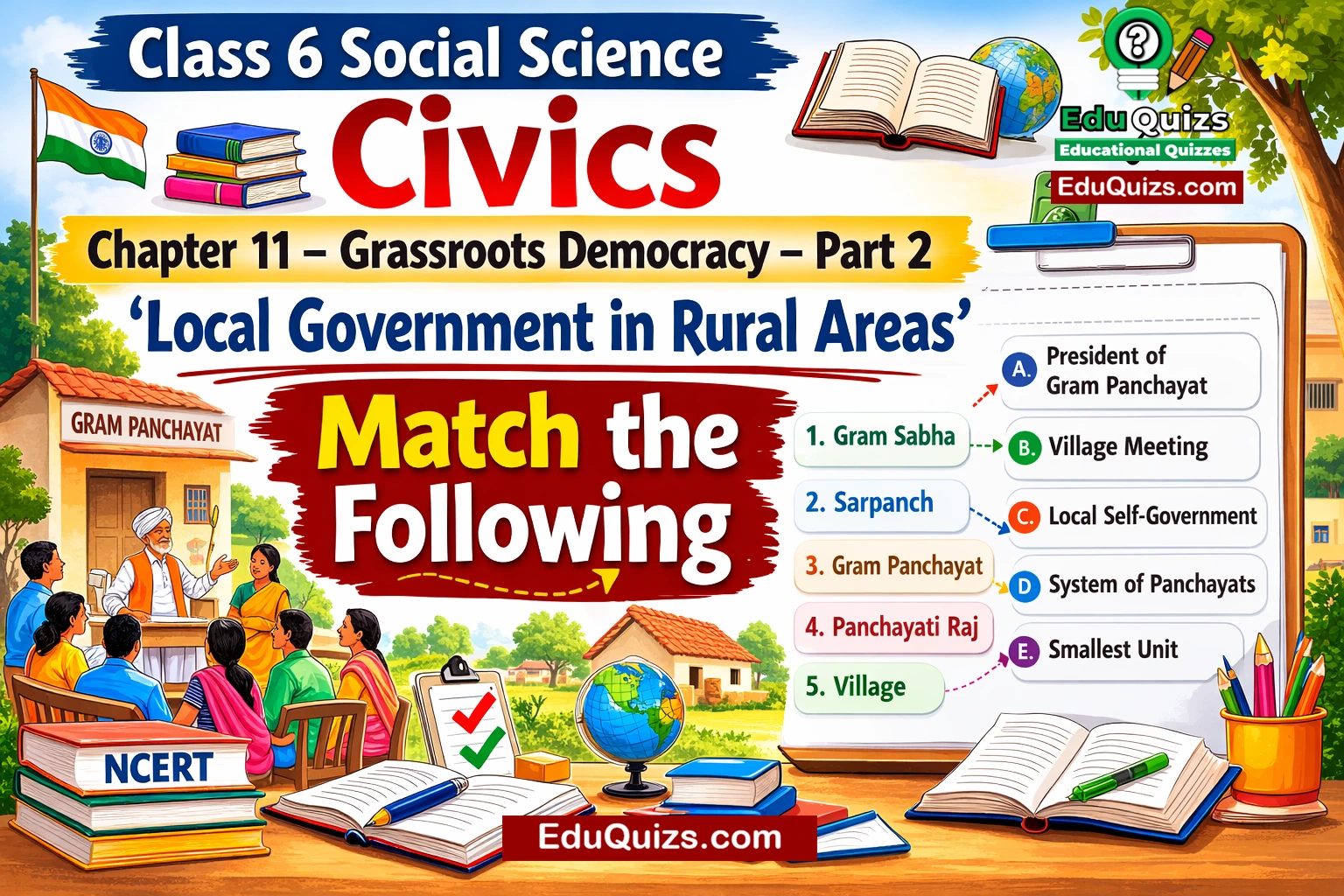
Class 6 Social Science Civics – Chapter 11: Grassroots Democracy – Part 2 (Local Government in Rural Areas) Match the Following Best for Practice

Class 6 Social Science Civics – Chapter 11: Grassroots Democracy – Part 2 (Local Government in Rural Areas) Match the Following Gram Sabha Sarpanch Panchayati Raj NCERT questions

Class 6 Social Science Civics Match the Following – Chapter 11: Grassroots Democracy – Part 2 (Local Government in Rural Areas)

Class 6 Social Science Civics – Chapter 11: Grassroots Democracy – Part 2 (Local Government in Rural Areas) Match the Following. Class 6 Social Science Chapter 11: Match the Following Statement for Grassroots Democracy – Part 2 Local Government in Rural Areas (based on NCERT textbook Exploring Society: India and Beyond).


Match the Following with Answers for Practice – SST Chapter 11 – Grassroots Democracy – Part 2 Local Government in Rural Areas

Class 6 Social Science – Exploring Society: India and Beyond
Theme D – Governance and Democracy
S. St. Chapter 11: Grassroots Democracy – Part 2 Local Government in Rural Areas
Class 6 Social Science Civics – Chapter 11: Grassroots Democracy – Part 2 (Local Government in Rural Areas) Match the Following. This includes Match the Following normally asked in school exams, tests, and NCERT exercises.

Class 6 Social Science Civics – Chapter 11: Grassroots Democracy – Part 2 (Local Government in Rural Areas) Match the Following Gram Sabha Sarpanch Panchayati Raj NCERT questions
Match the Following Questions for Class 6 Civics Chapter 11 – Grassroots Democracy Part 2: Local Government in Rural Areas (NCERT Practice)

Set 1 – Class 6 Social Science Civics – Chapter 11: Grassroots Democracy – Part 2 (Local Government in Rural Areas) Match the Following

Column AColumn B
1. Gram Panchayata. Block level institution
2. Panchayat Samitib. District level institution
3. Zila Parishadc. Village council
4. Sarpanchd. Head of Gram Panchayat
5. Gram Sabhae. Adult voters of village
6. Panchayat Secretaryf. Maintains records
7. Patwarig. Maintains land records
8. Panchayati Rajh. Local self-government
9. Three-tier systemi. Village, Block, District
10. Villages in Indiaj. About 600,000

Answers

1–c
2–a
3–b
4–d
5–e
6–f
7–g
8–h
9–i
10–j


Class 6 Social Science Civics – Chapter 11: Grassroots Democracy – Part 2 (Local Government in Rural Areas) Match the Following

Related Practice Questions:


Set 2 – Class 6 Social Science Civics – Chapter 11: Grassroots Democracy – Part 2 (Local Government in Rural Areas) Match the Following

Column AColumn B
1. Lakshmanpura. Population about 700
2. Farmersb. Main occupation in village
3. Panchayatc. Village council
4. Governanced. Decision making
5. Rural populatione. Two-thirds of India
6. India’s populationf. Over 1.4 billion
7. Towns in Indiag. About 8,000
8. Cities in Indiah. Over 4,000
9. Village needsi. Water and roads
10. Local governmentj. Solves village problems

Answers

1–a
2–b
3–c
4–d
5–e
6–f
7–g
8–h
9–i
10–j


Set 3 – Class 6 Social Science Civics – Chapter 11: Grassroots Democracy – Part 2 (Local Government in Rural Areas) Match the Following

Column AColumn B
1. Dnyaneshwar Kamblea. Sarpanch of Tarangfal
2. Tarangfal villageb. Solapur district
3. Solapurc. Maharashtra
4. Lok seva, gram sevad. Service to village
5. Vandana Maidae. First female Sarpanch
6. Khankhandvif. Village in Madhya Pradesh
7. Bhil communityg. Tribal community
8. Women participationh. Sabha meetings
9. Educationi. Issue addressed
10. Sanitationj. Village improvement

Answers

1–a
2–b
3–c
4–d
5–e
6–f
7–g
8–h
9–i
10–j


Set 4 – Class 6 Social Science Civics – Chapter 11: Grassroots Democracy – Part 2 (Local Government in Rural Areas) Match the Following

Column AColumn B
1. Hiware Bazara. Village in Maharashtra
2. Popatrao Pawarb. Sarpanch
3. Rainwater harvestingc. Water conservation
4. Watershed conservationd. Improve water supply
5. Tree plantatione. Lakhs of trees
6. Groundwater rechargef. Result of conservation
7. Village cooperationg. Collective effort
8. Prosperous villageh. Hiware Bazar today
9. Padma Shrii. Award received
10. Anna Hazare modelj. Inspired development

Answers

1–a
2–b
3–c
4–d
5–e
6–f
7–g
8–h
9–i
10–j


Set 5 – Class 6 Social Science Civics – Chapter 11: Grassroots Democracy – Part 2 (Local Government in Rural Areas) Match the Following

Column AColumn B
1. Panchayat Secretarya. Calls meetings
2. Administrative dutiesb. Secretary
3. Patwaric. Land records
4. Village mapsd. Maintained by Patwari
5. Old mapse. Historical information
6. Gram Sabhaf. Village meeting
7. Men and womeng. Participate in discussions
8. Decisionsh. Taken in Gram Sabha
9. Village issuesi. Discussed locally
10. Governancej. Local participation

Answers

1–a
2–b
3–c
4–d
5–e
6–f
7–g
8–h
9–i
10–j


Set 6 – Class 6 Social Science Civics – Chapter 11: Grassroots Democracy – Part 2 (Local Government in Rural Areas) Match the Following

Column AColumn B
1. Child-Friendly Panchayata. Focus on children
2. Bal Sabhab. Meeting of children
3. Bal Panchayatc. Children participation
4. Maharashtrad. Example of Bal Panchayat
5. Child laboure. Eliminated by initiative
6. Child marriagef. Prevented in villages
7. Parentsg. Encouraged to send children to school
8. Educationh. Important goal
9. Children’s rightsi. Protected
10. Participationj. Voice of children

Answers

1–a
2–b
3–c
4–d
5–e
6–f
7–g
8–h
9–i
10–j


Set 7 – Class 6 Social Science Civics – Chapter 11: Grassroots Democracy – Part 2 (Local Government in Rural Areas) Match the Following

Column AColumn B
1. Sangkhu Radhu Khandua. Gram Panchayat
2. West Sikkimb. Location
3. Compound wallsc. School safety
4. School kitchensd. Hygienic meals
5. Midday meale. Students’ nutrition
6. Child-friendly Panchayatf. Special recognition
7. Schoolsg. Built facilities
8. Children’s welfareh. Main objective
9. Village developmenti. Panchayat work
10. Community supportj. Local cooperation

Answers

1–a
2–b
3–c
4–d
5–e
6–f
7–g
8–h
9–i
10–j


Set 8 – Class 6 Social Science Civics – Chapter 11: Grassroots Democracy – Part 2 (Local Government in Rural Areas) Match the Following

Column AColumn B
1. Children’s Parliamenta. Democratic initiative
2. Bunker Royb. Founder
3. Barefoot Collegec. Organisation
4. Rajasthand. Location
5. Night schoolse. Education for poor children
6. Electionsf. Democratic process
7. Cabinetg. Student leaders
8. Leadershiph. Skill developed
9. Social responsibilityi. Learned by children
10. Award 2001j. World’s Children’s Honorary Award

Answers

1–a
2–b
3–c
4–d
5–e
6–f
7–g
8–h
9–i
10–j


Set 9 – Class 6 Social Science Civics – Chapter 11: Grassroots Democracy – Part 2 (Local Government in Rural Areas) Match the Following

Column AColumn B
1. Panchayat Samitia. Block level body
2. Zila Parishadb. District body
3. Gram Panchayatc. Village body
4. Development plansd. Collected from villages
5. Funds allocatione. Government support
6. PMGSYf. Rural roads scheme
7. MLAg. Member of state legislature
8. Sarpanchh. Village leader
9. Reserved seatsi. Women participation
10. Disadvantaged groupsj. Representation ensured

Answers

1–a
2–b
3–c
4–d
5–e
6–f
7–g
8–h
9–i
10–j


Set 10 – Class 6 Social Science Civics – Chapter 11: Grassroots Democracy – Part 2 (Local Government in Rural Areas) Match the Following

Column AColumn B
1. Arthaśhāstraa. Ancient governance text
2. Kautilyab. Author
3. Chanakyac. Another name of Kautilya
4. Sangrahanad. 10 villages
5. Karvatikae. 100 villages
6. Dronamukhaf. 400 villages
7. Sthaniyag. 800 villages
8. Administrationh. State structure
9. Governancei. Management of state
10. Ancient Indiaj. Early administrative ideas

Answers

1–a
2–b
3–c
4–d
5–e
6–f
7–g
8–h
9–i
10–j

Subscribe our Youtube Channel for video.