
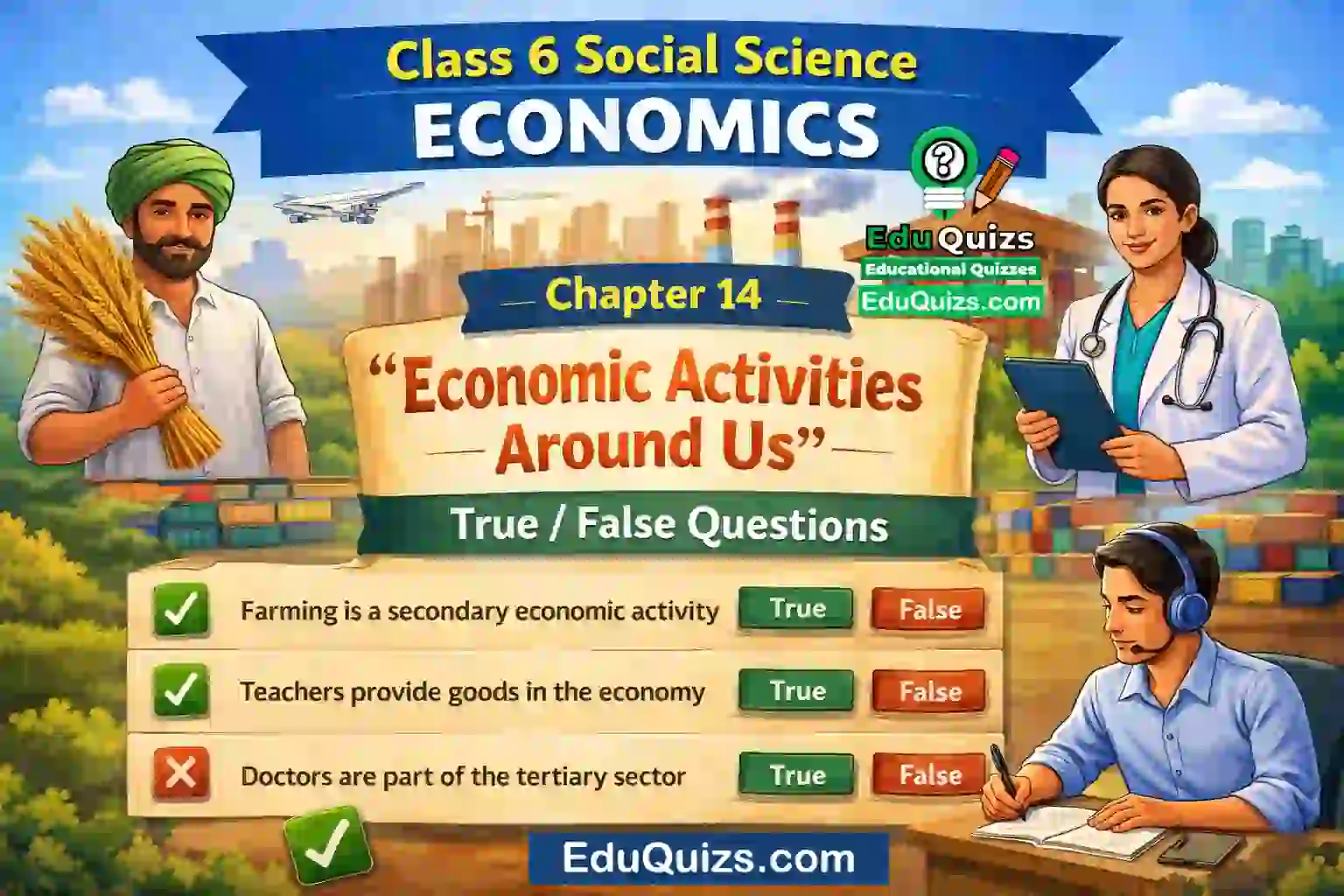
Class 6 Social Science Economics – Chapter 14: Economic Activities Around Us True/False questions
Class 6 Social Science Economics – Chapter 14: Economic Activities Around Us True/False. Class 6 Social Science Chapter 14 True/False Statement for “Economic Activities Around Us” (based on NCERT textbook Exploring Society: India and Beyond).
True/False with Answers for Practice – SST Chapter 14 – Economic Activities Around Us
Class 6 Social Science – Exploring Society: India and Beyond
Theme D – Economic Life Around Us
S. St. Chapter 14: Economic Activities Around Us
Class 6 Social Science Economics – Chapter 14: Economic Activities Around Us True/False. This includes True/False normally asked in school exams, tests, and NCERT exercises.
Set 1 – Class 6 Social Science Economics – Chapter 14: Economic Activities Around Us True/False
- Economic activities are those activities that create monetary value.
Answer: True - Non-economic activities always involve earning money.
Answer: False - Primary sector activities depend directly on nature.
Answer: True - Manufacturing is a primary sector activity.
Answer: False - Agriculture is an example of the primary sector.
Answer: True - Tertiary sector is also known as the service sector.
Answer: True - Mining is a secondary activity.
Answer: False - Economic sectors are groups of similar activities.
Answer: True - Banking is part of the tertiary sector.
Answer: True - Forestry does not depend on nature.
Answer: False
Class 6 Social Science Economics – Chapter 14: Economic Activities Around Us True/False
Related Practice Questions:
- Class 6 Social Science Economics Chapter 14 Economic Activities Around Us MCQs
- Class 6 Economics Chapter 14 Economic Activities Around Us – NCERT Question Answers
- Class 6 Economics Chapter 14 Economic Activities Around Us – Extra Important Questions
- Class 6 Economics Chapter 14 Economic Activities Around Us – Practice Worksheet
- Class 6 Social Science Chapter 14 Economic Activities Around Us – True False Questions
- Class 6 Social Science Economics Chapter 14 Economic Activities Around Us – Fill in the Blanks
- Class 6 Social Science Chapter 14 Economic Activities Around Us – Match the Following
- Class 6 Social Science Economics Chapter 14 Economic Activities Around Us – Summary Notes
Set 2 – Class 6 Social Science Economics – Chapter 14: Economic Activities Around Us True/False
- Secondary sector activities use raw materials from the primary sector.
Answer: True - Teachers are part of the primary sector.
Answer: False - Construction is included in the secondary sector.
Answer: True - Fishing is a tertiary activity.
Answer: False - Electricity production comes under the secondary sector.
Answer: True - Doctors provide services in the tertiary sector.
Answer: True - Raw materials are directly used in tertiary activities.
Answer: False - Cotton is used to make clothes in the secondary sector.
Answer: True - Transport services are part of the primary sector.
Answer: False - Economic activities help in earning livelihood.
Answer: True
Set 3 – Class 6 Social Science Economics – Chapter 14: Economic Activities Around Us True/False
- Farmers selling milk directly is a primary activity.
Answer: True - Processing milk into butter is a tertiary activity.
Answer: False - Services are visible products.
Answer: False - Software development is a tertiary activity.
Answer: True - Mining involves extracting resources from nature.
Answer: True - All sectors work independently.
Answer: False - Textile factories are part of the secondary sector.
Answer: True - Mechanics provide services in the tertiary sector.
Answer: True - Economic activities have no connection with each other.
Answer: False - Livestock rearing is a primary activity.
Answer: True
Set 4 – Class 6 Social Science Economics – Chapter 14: Economic Activities Around Us True/False
- The tertiary sector supports primary and secondary sectors.
Answer: True - Farming depends on factories.
Answer: False - Paper is made from wood in the secondary sector.
Answer: True - Selling goods in shops is a tertiary activity.
Answer: True - Coal extraction is a secondary activity.
Answer: False - Warehouses store goods before sale.
Answer: True - Transportation helps in distribution of goods.
Answer: True - Secondary sector does not require raw materials.
Answer: False - Banking services belong to the tertiary sector.
Answer: True - Natural resources are used in primary activities.
Answer: True
Set 5 – Class 6 Social Science Economics – Chapter 14: Economic Activities Around Us True/False
- AMUL is an example of a cooperative.
Answer: True - Middlemen help farmers get better prices always.
Answer: False - Pasteurisation helps preserve milk.
Answer: True - Milk production is a tertiary activity.
Answer: False - Making cheese from milk is a secondary activity.
Answer: True - Retail shops are part of the tertiary sector.
Answer: True - Export means selling goods within the country.
Answer: False - Dairy is a place where milk is collected.
Answer: True - Farmers depended on middlemen earlier.
Answer: True - Cooperatives help farmers become independent.
Answer: True
Set 6 – Class 6 Social Science Economics – Chapter 14: Economic Activities Around Us True/False
- Economic sectors are based on similar characteristics.
Answer: True - Communication services belong to the primary sector.
Answer: False - Roads are built under the secondary sector.
Answer: True - Fish farming is a primary activity.
Answer: True - Tailoring clothes is a secondary activity.
Answer: True - Repairing mobile phones is a tertiary activity.
Answer: True - Electricity supply is a primary activity.
Answer: False - Natural resources are not important for production.
Answer: False - Transport helps move goods from one place to another.
Answer: True - Primary sector produces finished goods.
Answer: False
Set 7 – Class 6 Social Science Economics – Chapter 14: Economic Activities Around Us True/False
- Secondary sector converts raw materials into finished goods.
Answer: True - Farming requires services like transportation.
Answer: True - Tertiary sector does not provide any services.
Answer: False - Hotels are part of the tertiary sector.
Answer: True - Mining produces raw materials.
Answer: True - Agriculture is a secondary activity.
Answer: False - Shops sell goods directly to consumers.
Answer: True - Economic activities do not change over time.
Answer: False - Technology has increased economic activities.
Answer: True - Doctors are part of the service sector.
Answer: True
Set 8 – Class 6 Social Science Economics – Chapter 14: Economic Activities Around Us True/False
- Primary sector depends on natural resources.
Answer: True - Manufacturing cars is a primary activity.
Answer: False - Factories are part of the secondary sector.
Answer: True - Teachers provide services in the tertiary sector.
Answer: True - Electricity production is a tertiary activity.
Answer: False - Goods are produced in the secondary sector.
Answer: True - Services are provided in the tertiary sector.
Answer: True - Farmers do not depend on nature.
Answer: False - Warehousing is part of the tertiary sector.
Answer: True - All sectors are interconnected.
Answer: True
Set 9 – Class 6 Social Science Economics – Chapter 14: Economic Activities Around Us True/False
- Interdependence means sectors depend on each other.
Answer: True - Primary sector works alone without support.
Answer: False - Milk transport is a tertiary activity.
Answer: True - Production of goods is done in the tertiary sector.
Answer: False - Secondary sector needs raw materials.
Answer: True - Service providers help daily life.
Answer: True - Agriculture produces raw materials.
Answer: True - Communication is a primary activity.
Answer: False - Shops are part of tertiary activities.
Answer: True - Economic growth depends on all sectors.
Answer: True
Set 10 – Class 6 Social Science Economics – Chapter 14: Economic Activities Around Us True/False
- Economic activities are increasing with development.
Answer: True - Primary sector produces raw materials.
Answer: True - Secondary sector provides services only.
Answer: False - Tertiary sector supports both sectors.
Answer: True - Paper is made from wood in factories.
Answer: True - Recycling paper saves resources.
Answer: True - Finished goods are produced in the primary sector.
Answer: False - Trade is part of the tertiary sector.
Answer: True - Farming is independent of nature.
Answer: False - All sectors contribute to economic prosperity.
Answer: True
Subscribe our Youtube Channel for video. Class 6 Social Science Economics – Chapter 14: Economic Activities Around Us True/False
FAQ – Class 6 Social Science Economics – Chapter 14: Economic Activities Around Us True/False
True/False questions concept clarity कैसे बढ़ाते हैं?
True/False questions students को statements को ध्यान से पढ़ने और analyze करने की आदत डालते हैं। इससे concepts की सही understanding विकसित होती है और छोटी-छोटी mistakes पकड़ में आती हैं।
True/False questions solve करते समय common mistakes क्या होती हैं?
Students अक्सर बिना पूरा statement पढ़े answer कर देते हैं।
कुछ words जैसे “always”, “only”, “all” statement को गलत बना सकते हैं। इसलिए ध्यान से पढ़ना जरूरी है।
“All economic activities generate profit” statement सही है या गलत?
यह statement गलत है क्योंकि सभी economic activities profit नहीं देतीं। कुछ activities income देती हैं लेकिन profit जरूरी नहीं होता, जैसे सरकारी सेवाएं।
True/False questions में tricky statements कैसे पहचानें?
Tricky statements में:
extreme words होते हैं (always, never)
partial truth होता है
confusing examples दिए जाते हैं
इनको पहचानकर सही answer दिया जा सकता है।
क्या True/False questions guessing से solve किए जा सकते हैं?
कुछ हद तक guess किया जा सकता है, लेकिन सही तरीका है concept-based answer देना।
Guessing से marks lose होने का risk रहता है।
Statement-based questions exam में क्यों पूछे जाते हैं?
यह questions student की deep understanding को check करते हैं, न कि सिर्फ रटने की क्षमता।
इससे पता चलता है कि student concept को सही तरीके से समझता है या नहीं।
Economic activities chapter में कौन से statements important होते हैं?
sector classification (primary, secondary, tertiary)
goods vs services
livelihood examples
income-related concepts
इन topics से statements अक्सर पूछे जाते हैं।
True/False questions जल्दी solve करने की strategy क्या है?
पहले easy statements solve करें
doubtful statements को mark करें
keywords पर focus करें
इससे time management बेहतर होता है।
क्या True/False questions revision के लिए अच्छे हैं?
हाँ, ये quick revision के लिए best होते हैं क्योंकि:
कम समय में ज्यादा concepts cover होते हैं
memory recall improve होता है
10. Students अपनी mistakes कैसे improve कर सकते हैं?
गलत answers को note करें
concept दोबारा पढ़ें
similar questions practice करें
यह तरीका धीरे-धीरे accuracy बढ़ाता है।